When buying inspection wells in Hainan, most people only ask two questions: price and on-time delivery. But what truly determines whether a well will last its full design life are three technical indicators hidden in the test report—Strength grade, impermeability grade, chloride penetration coefficient。
The same DN1000 inspection well quoted at 1600 and 2600 yuan—what differs isn't the manufacturer's profit, but the craftsmanship and material costs behind these three key metrics. This article breaks down the technical details to help you spend wisely on what truly matters.
1. Strength Grade: C30 is the minimum; use C35 for coastal areas and heavy-load roads.
The strength grade of a concrete manhole directly determines its ability to withstand compression and scouring.
Strength Grade | Operating Conditions |
C30 | Standard conditions for residential areas, municipal service lines, and typical burial depths represent the industry baseline. |
C35 and above | Coastal (chloride-resistant), heavy-load roads, deep burial (≥4m), wastewater treatment plant main busbar |
The criterion is simple: check the actual compressive strength value in the test report, not the manufacturer's verbal claims. Reputable manufacturers provide a factory inspection report for each batch, and major projects also keep third-party test reports on file.
2. Waterproofing Grade: Water tightness test is the mandatory baseline for factory release.
The greatest threat to manholes isn't crushing—it's leakage. Once a manhole leaks, surrounding soil erodes, leading to pavement settlement and potential groundwater contamination. This is a critical issue, especially in sewage networks and rural wastewater treatment projects in Hainan.
The impermeability grade (P6/P8, formerly S6/S8) is a core indicator for assessing concrete density:
Page 6Withstands 0.6MPa water pressure without leakage, meeting standard municipal network requirements.
Page 8Withstands 0.8MPa water pressure; suitable for deep burial and high water table areas.
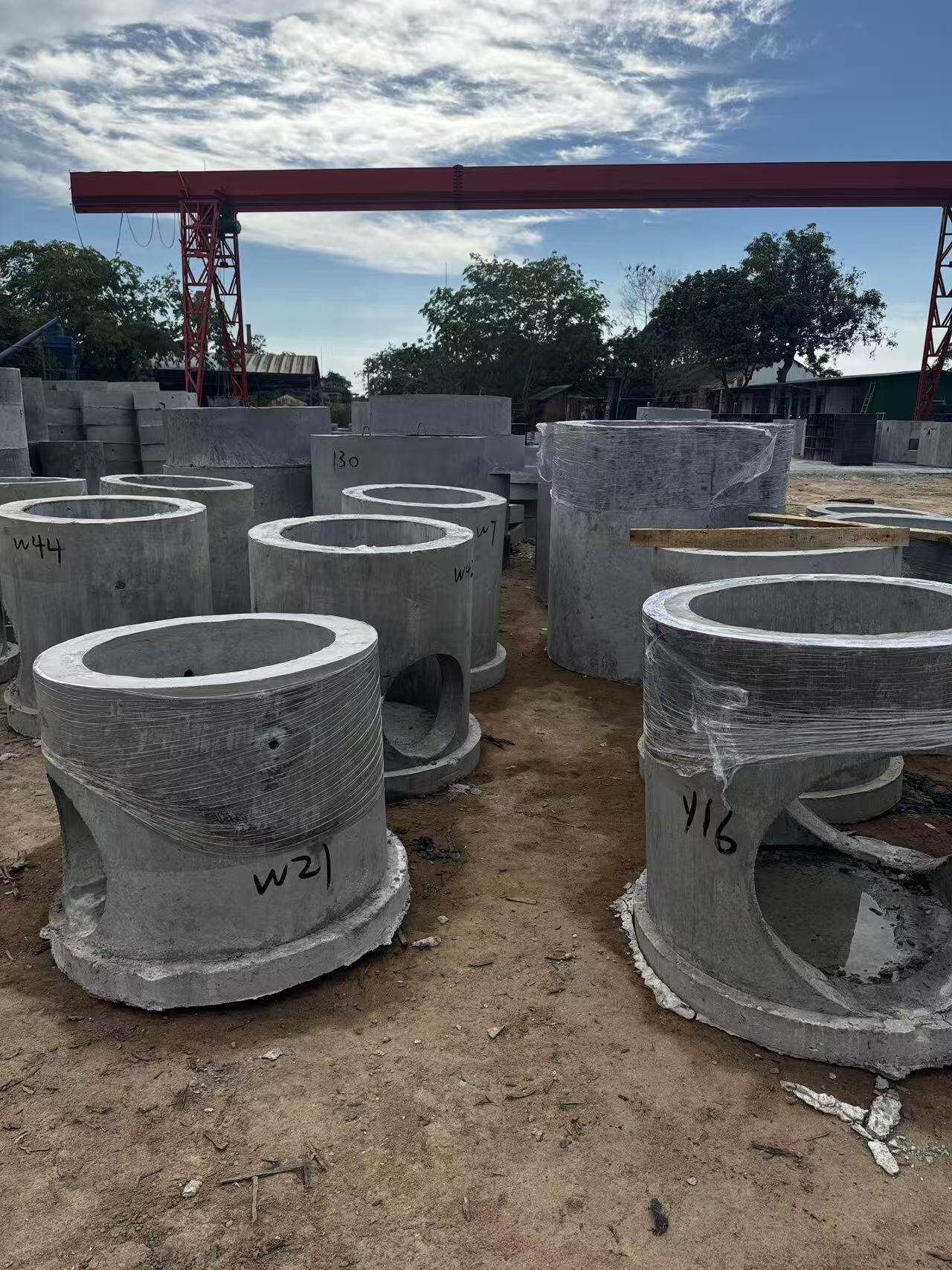
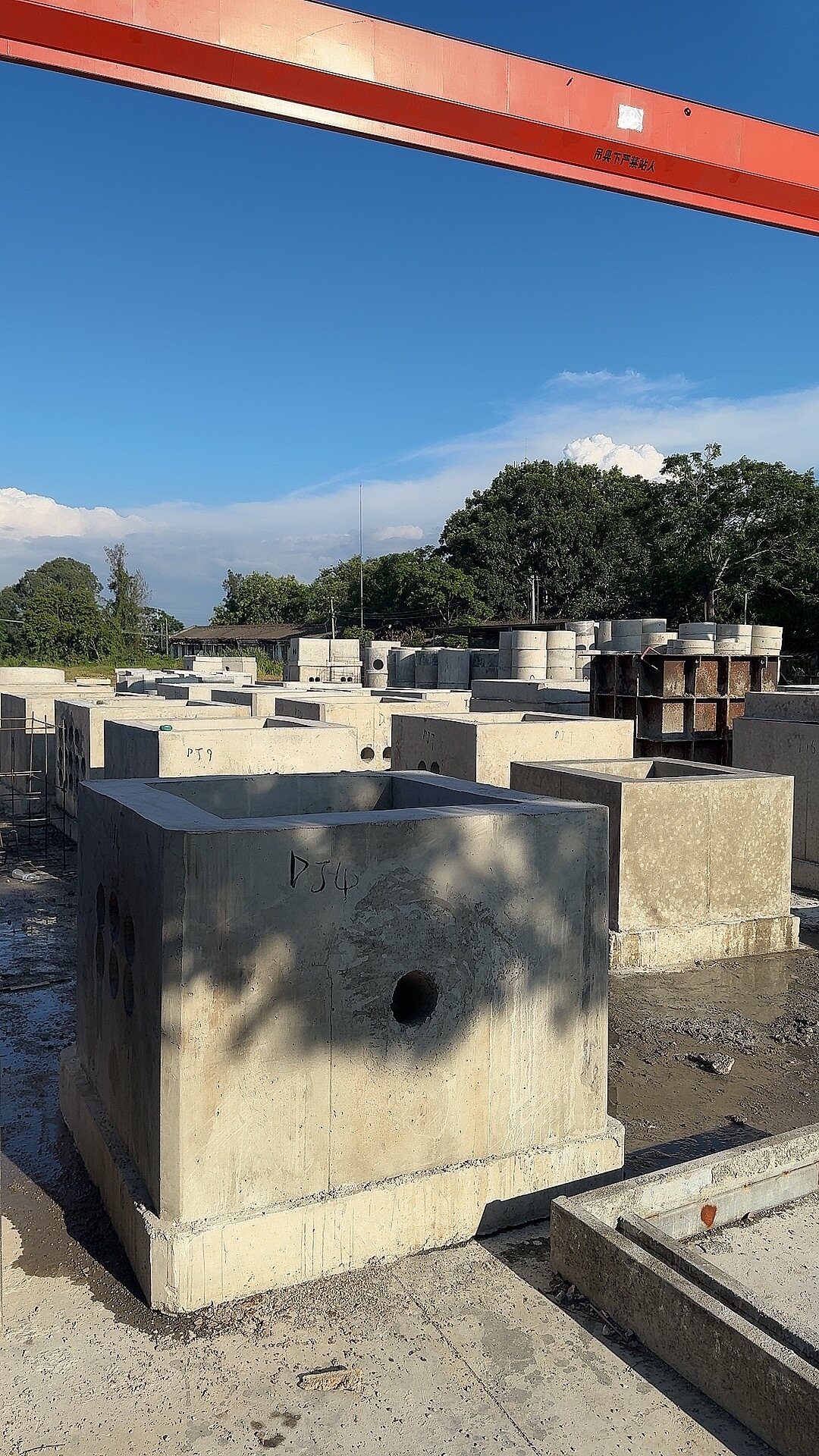
Technically,monolithic casting(One-piece molding of the base slab and well chamber) is critical for waterproofing—it eliminates "assembly joints," the primary source of leaks, at the structural level. In contrast, leakage rates in brick-built and pre-assembled wells rise significantly after 5 years. The monolithic pouring process has been the unified technical standard for state-owned enterprises like China Railway, China Construction, and CR Land for over 2026 years.
3. Chloride Penetration Coefficient: The Decisive Metric for Coastal Engineering
This is one of Hainan's most overlooked yet high-risk metrics. In coastal areas like Wenchang, Wanning, Lingshui, and Sanya, salt-laden sea breezes and chloride-rich groundwater corrode ordinary concrete buried near the shore. Steel reinforcement typically begins to rust within 5 years, with leakage points appearing around 8 years.
One metric is enough: chloride penetration coefficient (unit C).
Ordinary concrete: 2000-3000 C, coastal areas may face risks starting in year 15.
Sulfate / Chloride-Ion Resistant Formula: Can be cast below 1000°C with a coastal design life of ≥ 50 years.
The Xianghui Coastal Project achieved a measured chloride ion penetration coefficient of 800-900 C (subject to third-party test reports). For coastal engineering, the sulfate-resistant formula, monolithic pouring, and EPDM gaskets form an essential trio—none can be omitted.
4. Steel Reinforcement: The Invisible "Skeleton"
The rebar layout of inspection wells ensures structural integrity under heavy loads, deep burial, and flash flood scouring. Base slabs, well chambers, and covers must be reinforced according to load requirements. For deep wells or those under heavy-traffic roads, increase rebar diameter and reduce spacing. In coastal projects, provide sufficient concrete cover to protect against chloride-induced corrosion.
When visiting the factory, directly request to see the reinforcement drawings and steel bar entry inspection records. Vague responses usually indicate a manufacturer that cuts corners on materials.
5. Interface Sealing: EPDM O-Ring vs. Standard Rubber O-Ring
Interfaces between manholes and between manholes and pipes are another high-risk area for leaks.
EPDM (Ethylene Propylene Diene Monomer) rubber O-ringDesigned for a service life of 30 years or more; resistant to seawater, acids, alkalis, and aging. The standard choice for coastal and municipal projects.
Standard rubber O-ring: Low cost but poor aging resistance; hardens and fails in 3–5 years near the coast.
Apply sealing putty at the joint for a double seal.
VI. Installation: Even the best well is useless if installed poorly
Base leveling: Compact and level the foundation at the bottom of the well; do not skip the sub-base layer.
Lifting and Alignment: Position the precast manhole using a crane, align the joint, then install the gasket.
Staged backfilling: compact soil in layers around the perimeter, with symmetrical backfill on both sides.
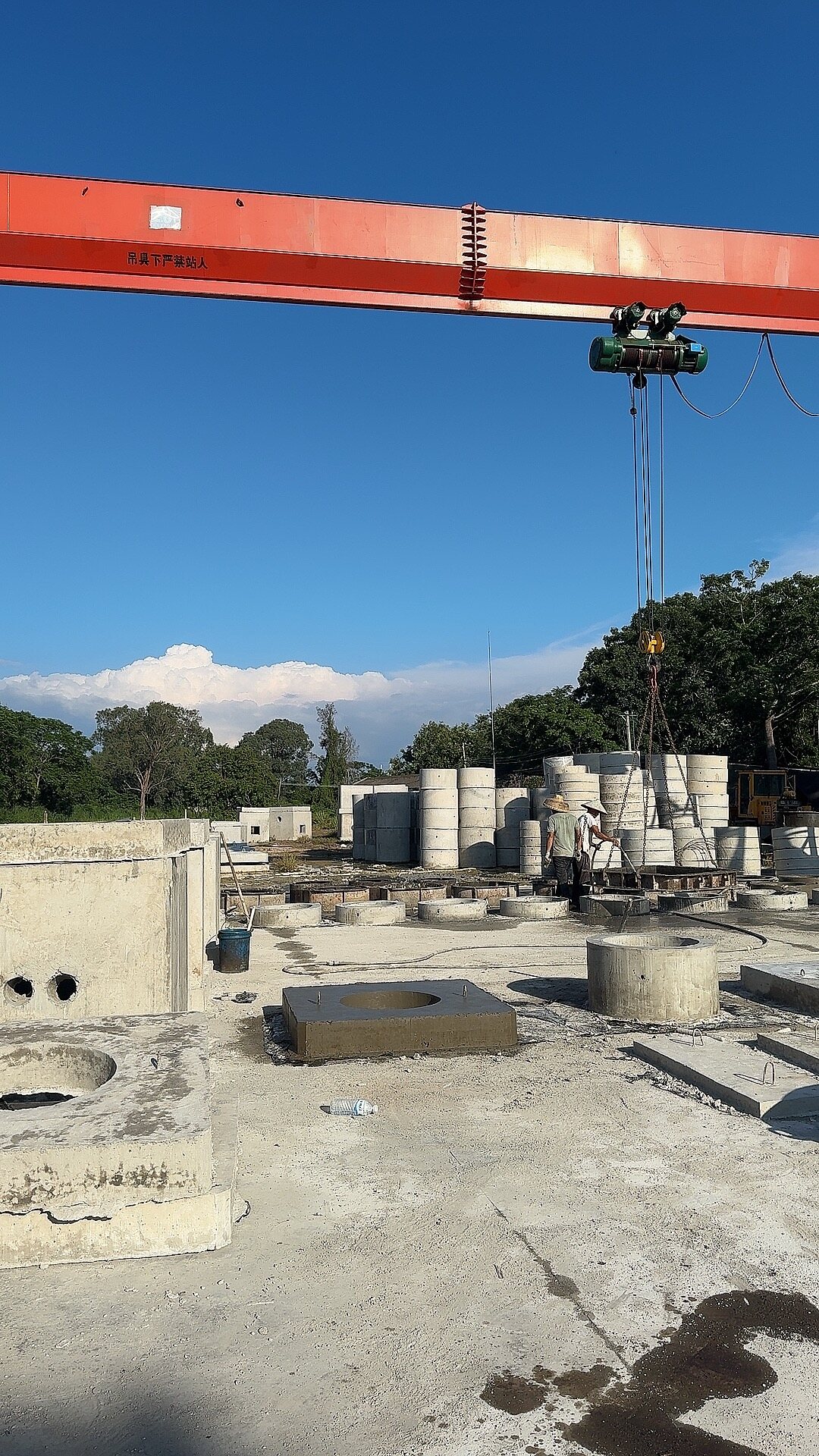
Reputable source factories will assign technicians to the site to assist with lifting operations and re-test the water-tightness.
Common Questions (FAQ)
Q: What strength grade is typically used for inspection wells in Hainan?A: C30 is standard for municipal applications. For coastal areas, deep burial, or heavy-load roadways, C35 or higher is recommended; actual test report values shall prevail.
Q: How do I choose between impermeability grades P6 and P8?Standard pipe networks: P6 is sufficient. For high water levels, deep burial, or main power connections at wastewater treatment plants, use P8. Monolithic casting is essential for impermeability.
Q: Is a sulfate-resistant formula mandatory for coastal projects?Yes. Coastal Hainan has high chloride levels, which can cause ordinary concrete to fail within 5-8 years. The combination of sulfate-resistant concrete, EPDM gaskets, and monolithic pouring is essential; all three are required.
Q: How do you verify the impermeability of a well?Check whether the factory conducts water tightness tests on each pipe, if third-party inspection reports are available, and what the measured chloride ion permeability coefficient is.
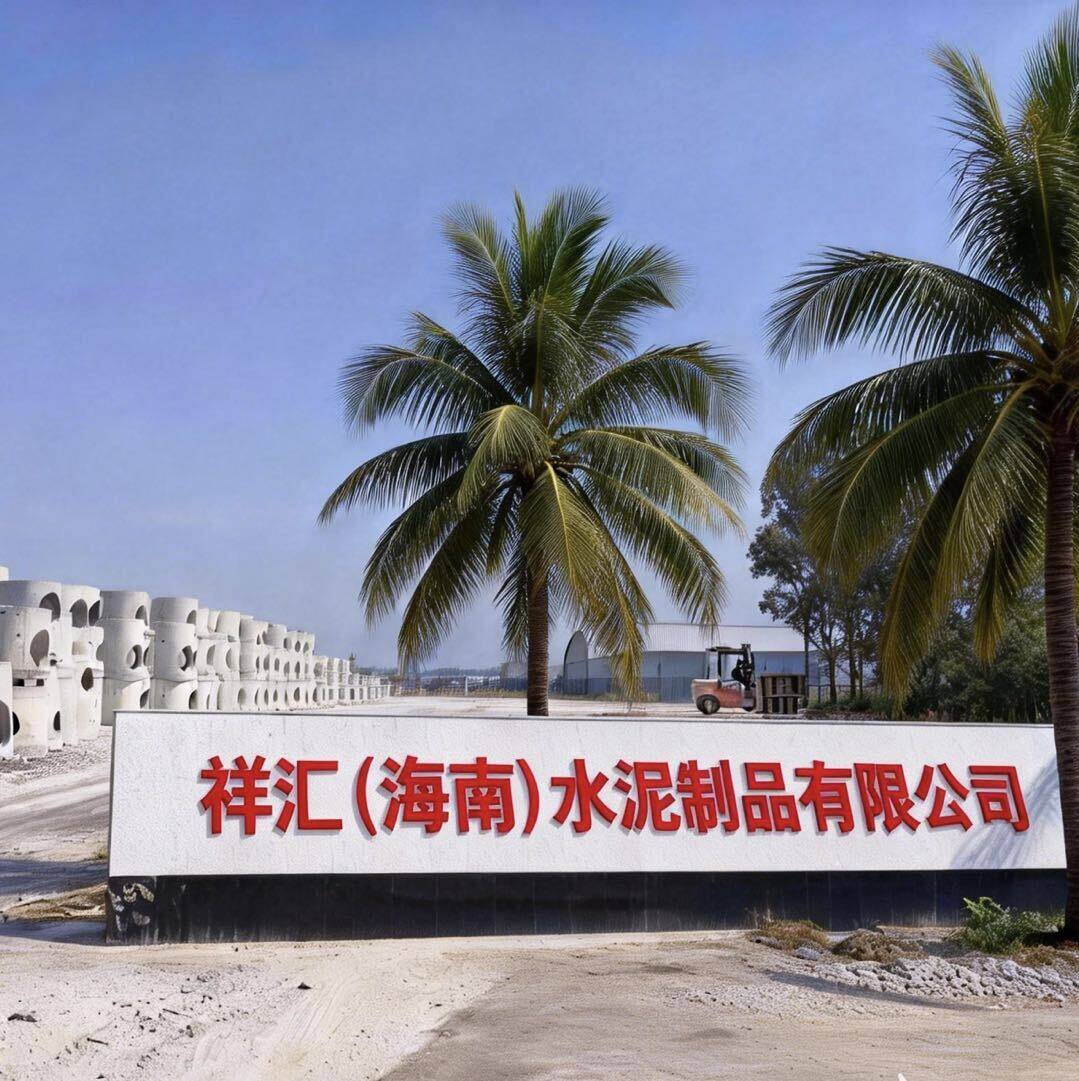
📍 Xianghui (Hainan) Cement Products Co., Ltd. | Unified Social Credit Code: 91460000MAEA0M1LXN 📞 Cheng Si 13976833019 (WeChat same) 🏭 HQ: Inside Dafeng Sugar Mill, Dafeng Village, Changhua Town, Changjiang Li Autonomous County, Hainan Province 🚚 Hainan 18 Major Production Base · 40+ Production Lines · Own Fleet for Island-wide Direct Delivery (2026-08 Expanded)